April 6-8, 2026 | Suzhou, China
"Advanced Intelligent Perception and HD Reconstruction Systems"
Organizers:
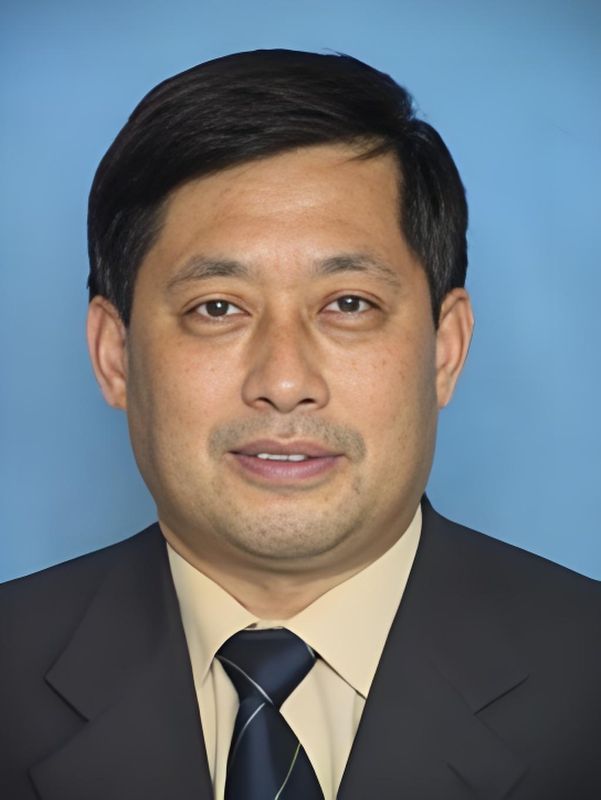
Chengdong Wu, Northeastern University, China
Chengdong Wu, Ph.D, Professor. He received the M.Sc. degree in control theory and its application from Tsinghua University, Beijing, China, in 1988, and the Ph.D. degree in industrial automation from Northeastern University, Shenyang, China, in 1994. He is currently a Professor and the Director of the Intelligent Robot Centre, Faculty of Robotic Science and Engineering, Northeastern University, Shenyang, China. He has finished about 30 of research projects funded from the Chinese government, such as the National Natural Science project, the Key Research Project, and the industryal projects. More 300 of journal papers and conference papers have been published, and nine books have been published in the last ten years. He has service as the Chairman or an Invited Speaker in the international conferences, and two paper were awarded as the Best Paper Prize of international conference. His main research fields are included machine vision, image processing, robot control, and machine learning.
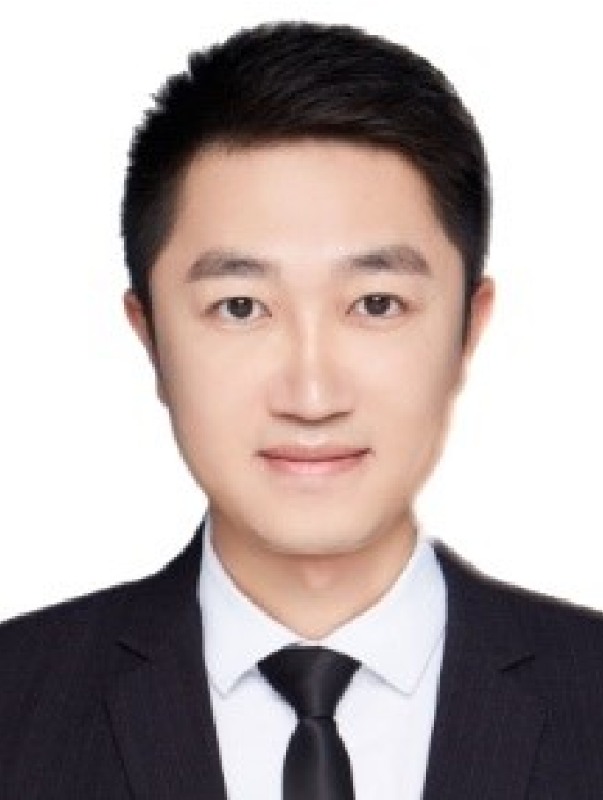
Yaoming Zhuang, Northeastern University, China
Yaoming Zhuang received the M.E. and Ph.D. degrees in pattern recognition and intelligent systems from Northeastern University, Shenyang, China, in 2016 and 2019, respectively. He has been a visiting scholar at Arizona State University. He is currently an Assistant Professor and the Director of the Machine Vision Laboratory at Northeastern University, China. He is an expert in the evaluation of strategic consulting projects of the Ministry of Science and Technology and the National Natural Science Foundation of China. He is the chief scientist of the key research and development program of the National Fire Rescue Bureau, and has undertaken more than 20 scientific research projects, including key projects funded by the National Natural Science Foundation of China. He is the Guest Editor of Special Issues for the journals Actuators and Electronics. He has won the championship and first prize in the 2020 China Under-water Robot Competition (the only one in China) on the autonomous underwater vehicle track. His research interests include sensor fusion for autonomous driving, intelligent robot systems and machine learning.

Mengxin Li, Shenyang Jianzhu University, China
Mengxin Li, Ph.D, Professor. She received the M.Sc. degree in control theory and its application from Shenyang Jianzhu University, Shenyang, China, in 2002, and the Ph.D. degree in artificial intelligence from Luton University, Luton, UK, in 2005.She completed her postdoctoral fellowship at Northeast University in 2008.
She is currently a professor and the head of the discipline of control science and engineering, Shenyang Jianzhu University, Shenyang, China. Her research interests include hyperspectral image detection, motion target detection and tracking and cerebral vascular image segmentation. She has finished over 20 research projects funded from Ministry of Housing and Urban-Rural Development, Department of Science and Technology of Liaoning Provincial. More than 200 journal papers and conference papers have been published, seven monographs have been published as Editor-in-chief, and 6 authorized invention patents have been obtained.
Her main research fields are included machine vision, image processing, pattern recognition.
Introcduction:
Advanced intelligent perception and high-definition (HD) reconstruction are increasingly pivotal for boosting efficiency, sustainability, and automation. However, outdoor and confined environments pose unique challenges for autonomous systems. Key obstacles include severe image degradation from variable lighting, occlusion, and turbidity; geometric distortions in complex scenes; limited on-board computing power of robots and drones; and interference from dynamic elements. Additionally, effective multi-modal data fusion (e.g., optical, multi-spectral, and depth sensors) and comprehensive coverage of large or hard-to-reach areas remain major hurdles.
This Special Session aims to bridge the gap between cutting-edge intelligent perception and robust HD reconstruction in such demanding settings. We welcome research presenting novel cross-domain solutions, including (but not limited to) image enhancement and restoration, robust object detection and segmentation, generative models for data augmentation and synthesis, real-time scalable 3D reconstruction, multi-sensor fusion strategies, and resilient systems for dynamic environmental interference. It seeks to advance intelligent systems by showcasing frontier research.
This Special Session centers on cutting-edge advancements in intelligent perception and high-definition (HD) reconstruction, focusing on addressing core challenges in complex environments. It serves as a platform for researchers worldwide to present original research, share technical insights, and discuss innovative solutions in related fields.
Conference Track(s)
-
Computer Vision and Pattern Recognition
-
Robotics and Autonomous Systems
-
Intelligent Perception and 3D Reconstruction
-
Multi-Modal Data Fusion and Signal Processing
-
Image/Video Enhancement and Analysis for Autonomous Systems
These tracks align with the core themes of the Special Session, covering technical domains such as visual perception, 3D reconstruction, multi-sensor fusion, and robust systems design—consistent with the focus on addressing challenges in intelligent perception and HD reconstruction for complex environments.